Growth Without Adding Complexity
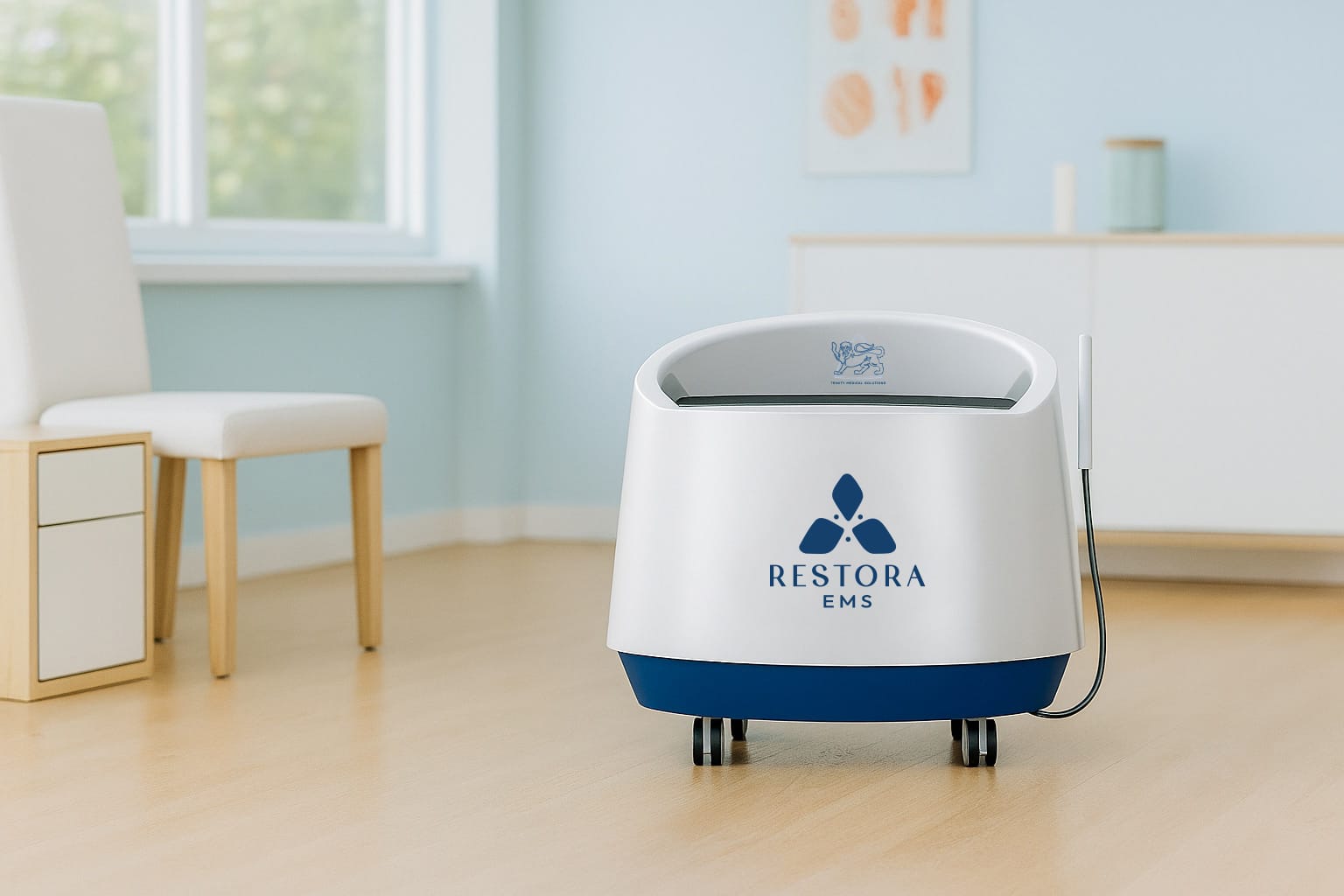
With evolving patient expectations and rising operating costs, expanding your practice can be easier said than done. For providers evaluating a pelvic floor therapy device, an FDA-cleared electromagnetic stimulation (EMS) chair is a non-invasive option that helps treat pelvic floor dysfunction by strengthening or relaxing pelvic floor muscles to improve symptoms such as urinary incontinence—without adding staff, construction, or major workflow changes.
That’s why many practices need to look beyond conventional growth models and focus on services that match existing patient needs. For OB/GYN, urology, chiropractic, physical therapy, wellness clinics, and MedSpas, pelvic health services are a practical way to address a common but often overlooked condition already present in the patient population.
Conditions like pelvic floor dysfunction may affect your patients across specialties, but they often go unnoticed. Incorporating pelvic health services into your practice helps you meet this underserved need while adding a scalable, non-invasive treatment that can improve quality of life and support sustainable growth. Solutions such as an EMS chair can expand your offerings without disrupting workflows or increasing operational strain.
This translates into a new revenue stream for medical practice growth.
This article looks at the business case for adding pelvic health services, the patient demand behind pelvic floor therapy, how EMS chair treatment fits into day-to-day practice operations, and the clinical, operational, and revenue benefits it can create.
The Demand May Already Be Sitting in Your Waiting Room
Pelvic health services present a unique growth opportunity that doesn’t depend on attracting new patients. Instead, it comes from catering to those who already trust your practice.
Many of your patients may experience symptoms of pelvic floor dysfunction, including urinary incontinence, urgency, frequent urination, or weakened pelvic floor muscles. Their concerns often go unreported because patients may feel uncomfortable discussing them or assume they’re a normal part of aging or life changes.
This is a common condition that affects many women, including after childbirth, and pelvic floor therapy can support postpartum recovery by rehabilitating strained muscles.
If you provide care for these specialties, you have patients who could benefit from pelvic health services:
- OB/GYN
- Urology
- Chiropractic or physical therapy
- Wellness clinics
- MedSpas
Those who need it most may not have access to pelvic health therapy or pelvic floor strengthening devices such as the FDA-cleared EMS chair. Recognizing and bridging this gap can help your patients access effective treatment for urinary incontinence.
Why Pelvic Health Makes Business Sense
When evaluating new services, you need to look beyond clinical benefits and consider long-term sustainability. Pelvic health stands out because it aligns with your patients’ demands and your practice’s growth.
Many medical facilities have limited access to non-invasive pelvic floor treatments. This creates an opportunity for you to differentiate your practice while meeting a common need.
Incontinence chair therapy requires in-office treatment and commonly follows a six-session course for optimal results, creating opportunities to provide ongoing patient care and follow-up. Most people have noticed improvement after two to three sessions, which can lead to better retention from each session. Offering these as cash-pay medical services gives you greater flexibility without relying on insurance reimbursement.
Pelvic health offers a way to improve patient outcomes and build a new revenue stream for your medical practice.
The Rise of Cash-Pay, Quality-of-Life Services
Patients willingly invest in what makes them feel better and stay active. They value healthcare solutions that are convenient, comfortable, and easy to incorporate into their daily routines. A review study shows that patients prefer non-invasive options with no downtime or long recovery periods, especially for conditions that affect their quality of life.
Pelvic floor dysfunction can impact your patients’ confidence, activity levels, social interactions, and well-being.
By focusing on quality-of-life-driven solutions, you can naturally expand your cash-pay medical services to address these concerns. Providing an EMS chair for pelvic floor therapy means you can help patients regain control and improve daily functioning.
Common Barriers to Adding New Services
If you’ve considered increasing your service offerings, you’ve probably encountered these familiar concerns:
- Staffing limitations: Will you need additional staff to support the service?
- Training requirements: How much time and effort will it take to get your staff up to speed?
- Time constraints: Can you realistically fit another service into your busy schedule?
- Workflow disruption: Will introducing something new complicate processes or slow down patient flow?
- Return-on-investment uncertainty: Will this generate sufficient patient interest and long-term value to justify the cost?
The good news is that not every service requires a complete overhaul. An FDA-cleared EMS chair adds value for your patients without straining the limits of your practice.
What Makes a Service Scalable in Modern Practice?
When evaluating a new service, consider how easily it fits into your operations, patient demand, and clinical outcomes. Some require dedicated staff, extensive onboarding, complex scheduling, continuous supervision, or significant follow-up care.
In contrast, non-invasive pelvic health therapy is a scalable service that integrates easily into your workflows with minimal disruption. Introducing an electromagnetic chair for pelvic floor therapy requires minimal staff involvement and delivers a consistent patient experience. The treatment is easy to understand, so patients know what to expect from their recommended care plan.
Successful additions balance patient value with operational simplicity, allowing your practice to grow without stressing your team.
Where Pelvic Health Solutions Fit In
Modern pelvic health technologies are a practical way to support your patients’ clinical outcomes and improve efficiency. They allow you to provide much-needed therapies without changing your existing workflows.
They help you reduce staff time and deliver consistent, repeatable treatments. You can plan sessions easily, maintain a steady patient flow, and avoid scheduling interruptions. They ensure shorter treatment times, letting you manage care smoothly, even during busy clinic hours.
From your patients’ perspective, you can offer a more comfortable, less demanding experience. For instance, EMS-based incontinence chair treatment is non-invasive, and patients are fully clothed. It requires no downtime, allowing patients to return to their routines without impacting their quality of life. This ease of experience supports better patient engagement and follow-through.
Real-World Impact: Where Patient Care and Practice Growth Meet
Let’s see how you can balance patient care and practice growth through pelvic health services:
- Improved patient outcomes: Treatment for urinary incontinence through pelvic floor muscle training can help your patients feel better, confident, and independent.
- Increased patient satisfaction: Short, non-invasive pelvic floor chair treatments don’t require your patients to spend time recovering, so they can get on with their day.
- New revenue stream without major overhead: Pelvic health services create opportunities to expand your offerings without requiring major investments in staff or infrastructure.
- Differentiation in a competitive market: Offering dedicated pelvic health solutions can help set your practice apart as patients increasingly seek non-invasive treatment options.
- A rare alignment of clinical value and growth: By improving access to an overlooked patient need, you can boost outcomes, widen your service offerings, and support sustainable practice growth.
What This Means for Forward-Thinking Clinics
Your patients are looking for convenient, effective, and non-invasive solutions for their health concerns. If you identify and respond to these expectations, you’re better positioned for long-term success.
Pelvic health offers a strategic opportunity to grow your services and practice. Meeting this under-recognized need can help you improve patient care and outcomes while differentiating your practice in a competitive market.
A Smarter Way to Grow
Practice growth doesn’t always come from increasing capacity or adding resources. All you need to do is rethink how you deliver care and respond to your patients’ needs.
Respond to the rising demand for convenient treatments while strengthening your clinical position with scalable pelvic health services. Incorporating non-invasive solutions like the ReStora EMS Chair from Trinity Medical Solutions can help you deliver practical, patient-friendly care that distinguishes your practice and builds long-term value.