
Activates Full Muscle Depth
Recruits multiple layers of pelvic musculature, improving structure and support.
Support Starts Here
Strengthen the Pelvic Floor, Improve Daily Life
Pelvic floor dysfunction affects millions of people, including men and women, across all ages. Weakened pelvic muscles can lead to urinary or bowel leakage, pelvic organ prolapse, and diminished sexual function. In women, this may cause discomfort during intercourse; in men, it can contribute to erectile dysfunction.
Left unaddressed, these symptoms often disrupt daily routines, reduce physical activity, and erode confidence over time. Yet, many live with symptoms for years without effective treatment.
ReStora EMS gives providers a noninvasive tool to restore clients’ pelvic function and stability. Using high-intensity focused electromagnetic energy, this therapy activates deep muscle contractions to rebuild pelvic strength comfortably and consistently.
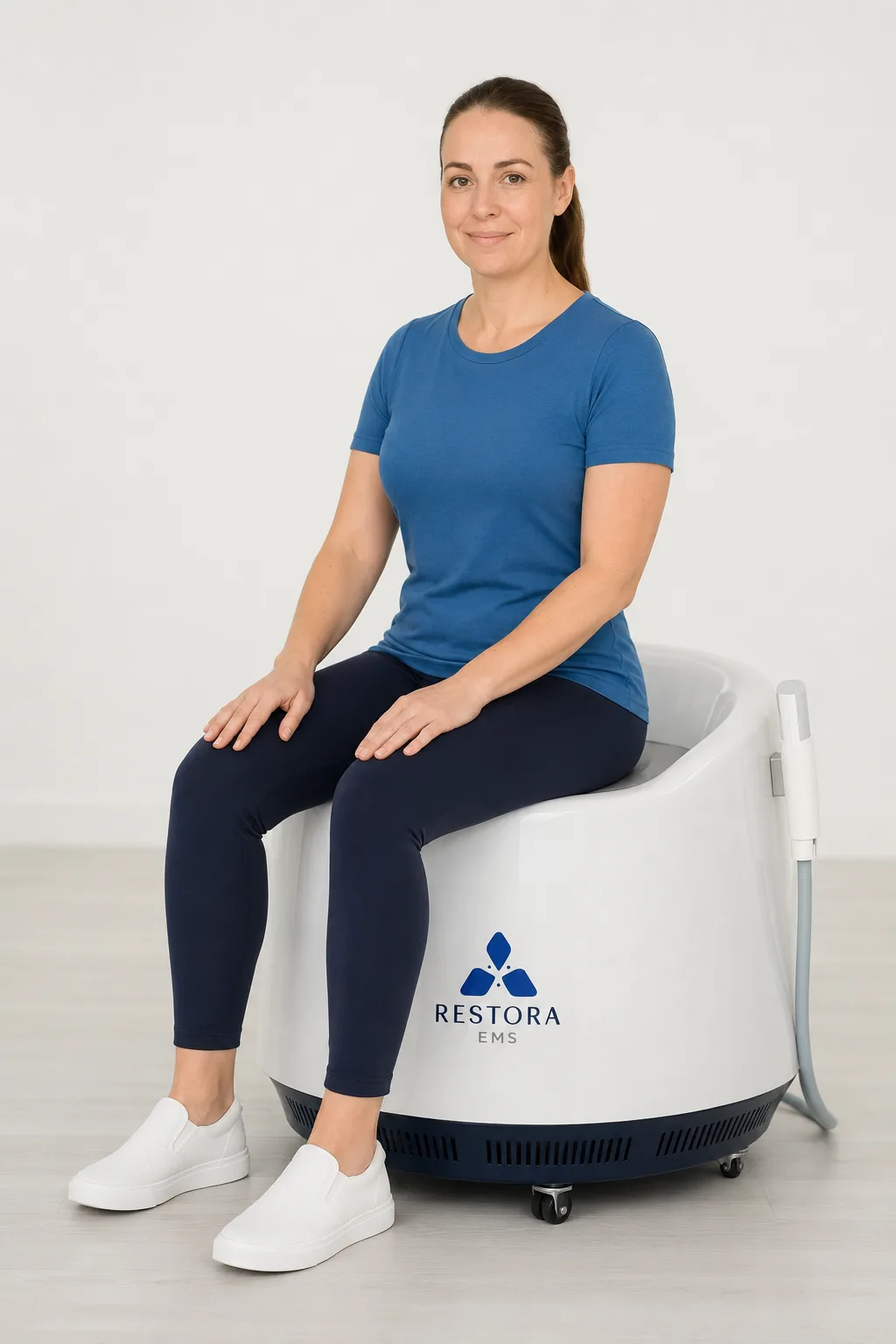
Electromagnetic pulses stimulate supramaximal contractions, rebuilding the pelvic floor through repeated, high-effort activation, without patient strain.
Recruits multiple layers of pelvic musculature, improving structure and support.
Refines neuromuscular timing for better control during daily movement.
Supports better posture, balance, and pressure regulation throughout the core.
Sessions are short, device-guided, and require no preparation or recovery.
Why Pelvic Floor Health Matters
The pelvic floor plays a vital role in many everyday functions. When properly conditioned, these muscles contribute to physical stability, organ support, and overall well-being. Strengthening the pelvic floor offers a wide range of clinical and quality-of-life benefits for both men and women.

Greater muscle tone helps prevent involuntary leakage when coughing, sneezing, or performing physical activity.
A strong pelvic floor supports internal organs, reducing the likelihood of descent into the vaginal or rectal canal.
Better muscle strength and coordination can increase pleasure and improve erectile performance during sexual activity.
When functioning well, the pelvic floor contributes to spinal alignment, balance, and reduced strain on the lower back.
Pelvic floor strength eases delivery, speeds recovery after childbirth or surgery, and helps prevent long-term issues.
Reduces symptoms of chronic pelvic pain by improving circulation, reducing tension, and promoting better muscle coordination.
Provider Questions
The pelvic floor is a network of muscles and connective tissue that forms the base of the pelvis. It stretches from the pubic bone to the tailbone and side to side between the sitting bones.
These muscles support critical structures in the lower abdomen, including the bladder, bowel, and—in women—the uterus. Openings for the urethra and anus pass through the pelvic floor, as does the vaginal canal in women. Though often overlooked, this muscle group plays a central role in several key bodily functions.
A healthy pelvic floor is essential to daily function and long-term health. These muscles:
When the pelvic floor works properly, these processes feel automatic. When dysfunction occurs, everyday activities can become difficult or uncomfortable.
Pelvic floor dysfunction occurs when the muscles are too weak, too tight, or poorly coordinated. It can present in a number of ways, including:
These symptoms can vary widely in severity and are often underreported, especially among older adults or postpartum individuals.
Yes. Although pelvic floor issues are often discussed in the context of childbirth or menopause, men also have a pelvic floor, and it serves equally important functions. In men, this muscle group supports bladder and bowel function and plays a key role in erectile function and ejaculation. Pelvic floor dysfunction in men may lead to:
Pelvic floor therapy can be an effective intervention for many of these concerns, helping men regain comfort, confidence, and control.
Yes, and this is often an overlooked revenue opportunity. Men with urinary leakage, post-prostatectomy incontinence, pelvic pain, or erectile dysfunction related to weak pelvic musculature are strong candidates. Offering pelvic floor strengthening to male patients expands the serviceable population and opens the door to a demographic that has very few non-invasive treatment options available to them.
The chair uses high-intensity focused electromagnetic energy to trigger thousands of deep, involuntary muscle contractions in a single 30-minute session, the equivalent of performing 15,000 Kegel exercises. This level of activation reaches muscle fibers that most patients cannot engage through voluntary effort alone, resulting in faster, more consistent strengthening.
Kegel exercises are notoriously difficult to perform correctly, and patient compliance over time is low. Most people engage the wrong muscle groups without realizing it, which limits results. The ReStora EMS Chair removes compliance entirely from the equation, delivering precise, deep stimulation automatically every session, making clinical outcomes far more predictable and consistent.
The standard protocol is six 30-minute sessions over three weeks, with two visits per week. Sessions are device-guided and require minimal staff involvement, making them easy to schedule alongside existing appointments. Most patients report noticeable improvement within the first two sessions, which supports strong retention through the full treatment series and into monthly maintenance visits.
The addressable patient population is broader than most providers expect. Beyond urinary incontinence, pelvic floor strengthening supports postpartum recovery, pre- and post-surgical rehabilitation, chronic pelvic pain, core instability, lower back pain, and sexual health concerns in both men and women. This gives practices multiple entry points for introducing the service across different patient demographics.
Early intervention produces the best outcomes, and proactive conversations about pelvic health tend to resonate well with patients. Providers don’t need to wait for severe symptoms; pelvic floor strengthening is appropriate for patients experiencing early signs of dysfunction, those recovering from childbirth or surgery, and even those looking to prevent future decline. Positioning it as a standard part of a pelvic health conversation makes it easier to introduce across a wider patient base.
The muscle improvements are real and durable, but the pelvic floor responds to ongoing conditioning just like any other muscle group. Most clinical guidelines recommend maintenance sessions every one to three months following the initial series. This creates a natural, recurring visit cadence that supports consistent patient retention and a predictable revenue stream for the practice.
Pelvic health should be proactive, not reactive. ReStora EMS makes it simple to provide meaningful support to patients seeking strength, control, and lasting comfort.
From physical therapists and primary care to wellness professionals and long-term care providers, this solution opens the door to better outcomes with minimal disruption.