
Strengthens pelvic floor muscles
Non-invasive electromagnetic stimulation activates the pelvic floor muscles to help strengthen them and restore muscle control.
The ReStora patient center
Your pelvic health deserves a thoughtful conversation. Explore clear, practical information about ReStora—and feel more prepared to talk with a provider.
Information for you. Care guided by your provider.
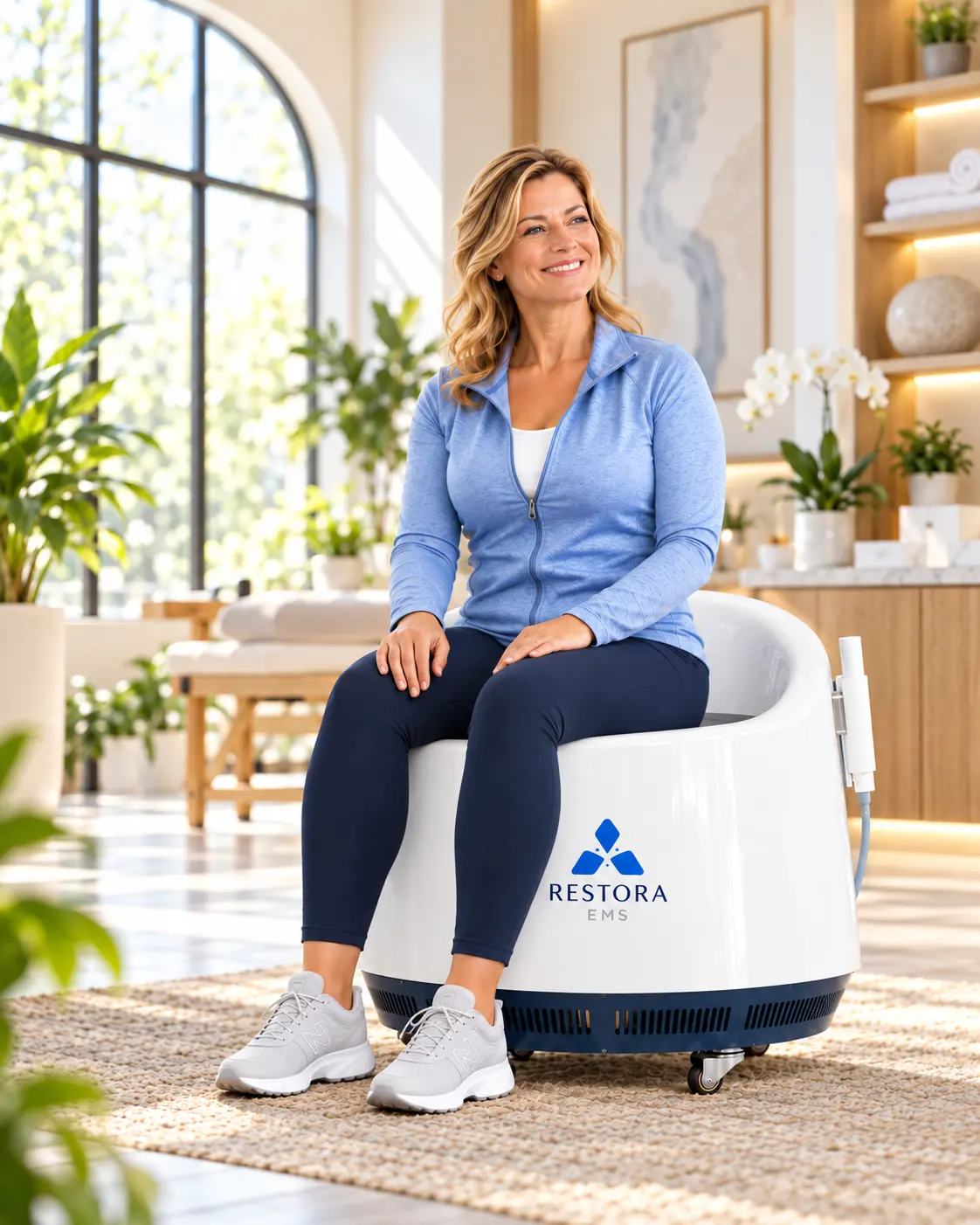
Understand the treatment
Pelvic floor muscles help support bladder control. ReStora is designed to help strengthen these muscles when they are weak.
Non-invasive electromagnetic stimulation activates the pelvic floor muscles to help strengthen them and restore muscle control.
ReStora is intended for pelvic floor muscle strengthening for the treatment of urinary incontinence in women and men.
Get to know ReStora
ReStora uses electromagnetic stimulation to help rehabilitate weak pelvic floor muscles for the treatment of urinary incontinence.
Your provider reviews your medical history, checks for contraindications, and decides whether this approach fits your needs.
You remain fully clothed while a trained provider supervises your session.
Stimulation is delivered from the chair, without surgery. Your provider explains what to expect during and after your session.
Before treatment
Tell your provider about your conditions, medications, implants, and recent procedures. This summary comes from the ReStora user manual and does not replace a complete screening.
Pacemakers, implanted electronic devices, drug pumps, life-support equipment, or electronic medical devices worn during treatment.
Do not receive treatment if you are pregnant or could be pregnant.
Suspected or diagnosed heart problems, or pulmonary insufficiency.
Taking anticoagulant medication (blood thinners). Do not stop prescribed medication to receive treatment.
Malignant tumors or a current fever.
Recent procedures where muscle contractions could interfere with healing.
Additional warnings & precautions
This page is educational. Your provider must review the complete manual and your individual circumstances.
Getting comfortable
Why it matters: Positioning helps the electromagnetic field reach the intended pelvic floor muscles. Ask your provider to check your alignment if you move or feel unsure.
Keep your spine comfortably straight and your body centered on the chair.
Your provider helps place the pelvic floor target area over the chair’s marked treatment area.
Rest both feet flat on the floor. Remain seated and avoid unnecessary movement during treatment.
A comfortable starting point
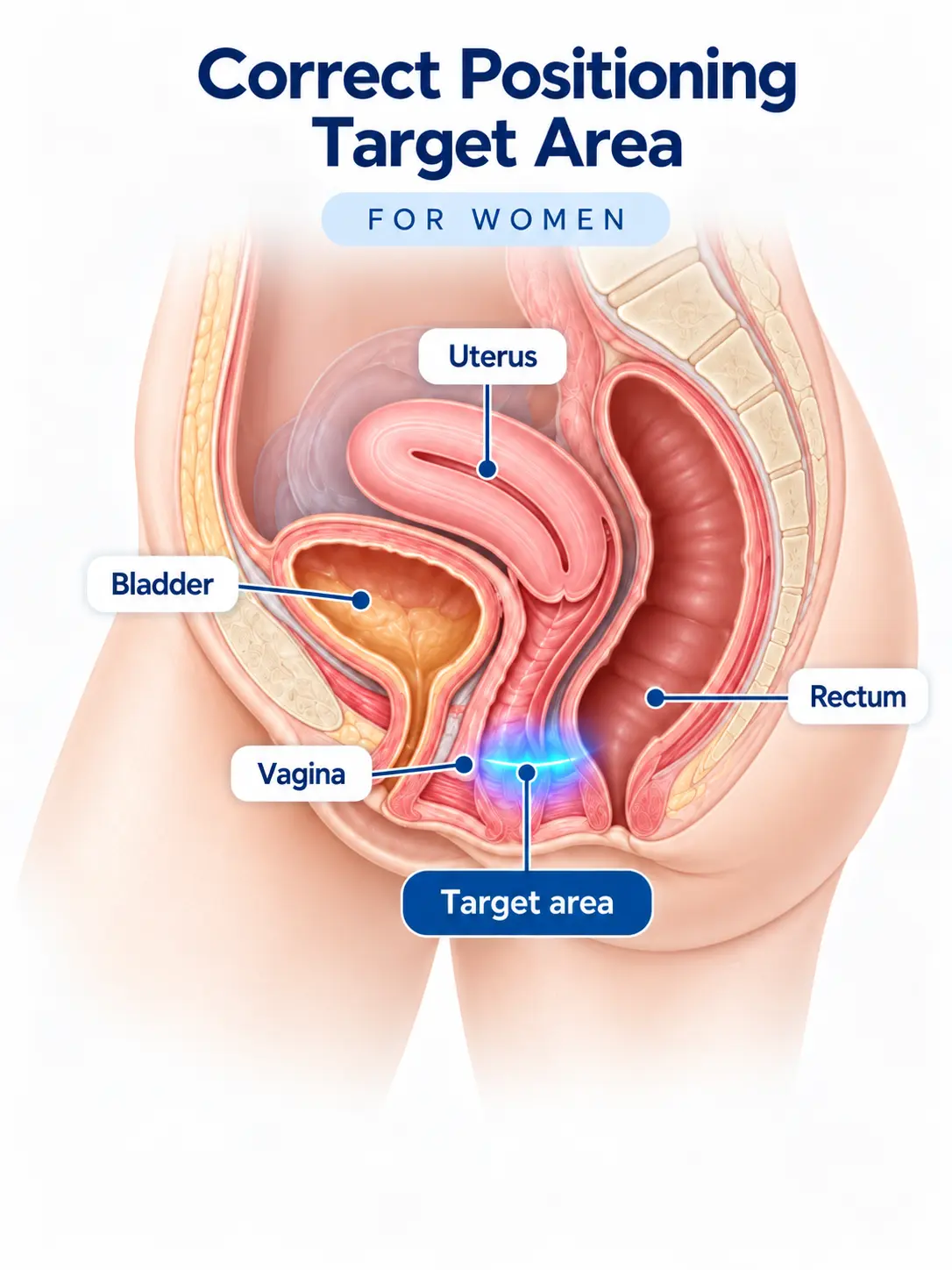
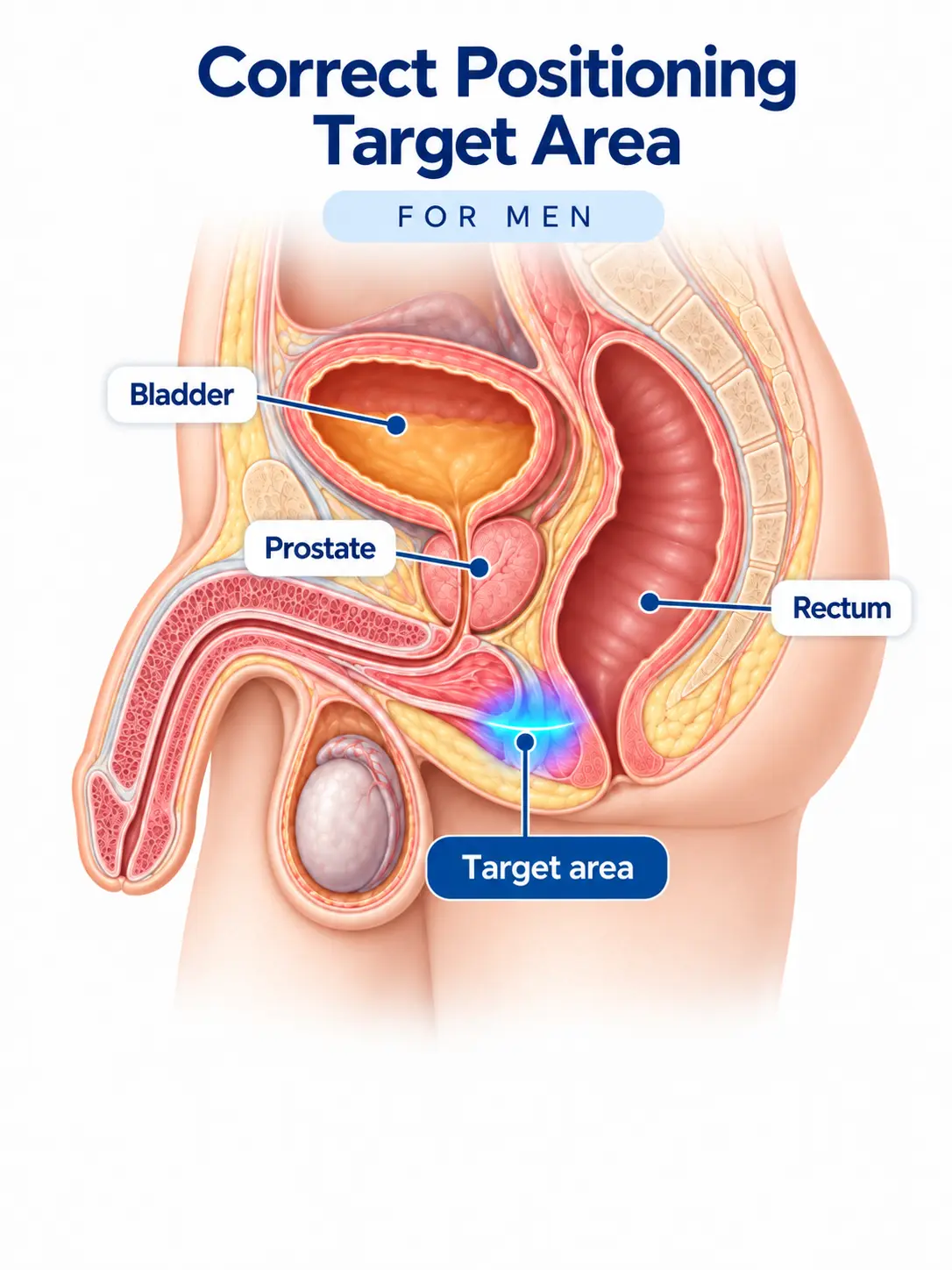
Illustrative positioning guides. Your provider confirms your position on the actual chair.
Understand before you decide
Pelvic floor muscles need to contract and relax. These private, interactive choices help you find words for a conversation with your provider.
This is an educational guide, not a diagnostic test. You can read through it without trying the movement.
Before you begin
Your choices stay on this page. They aren’t saved or sent.
Your next step, closer to home
Enter your ZIP code to explore up to three practices within 100 miles. Contact the practice to confirm appointments and discuss your needs.
A few helpful answers
Your provider is the best person to answer questions about your own care.
ReStora provides noninvasive electromagnetic stimulation to weak pelvic floor muscles for rehabilitation and treatment of urinary incontinence in adult men and women age 22 and older. A qualified healthcare professional must determine whether it is appropriate for you.
Yes. Treatment is delivered through clothing. The manual advises avoiding thick, jean-type material. Follow your provider’s instructions about clothing, removing metal and electronic items, and emptying your bladder before the session.
The user manual recommends a 28-minute session. Your licensed provider determines the treatment settings and schedule and explains what to expect for your individual circumstances.
Tell your provider if you feel pain, uncomfortable heat, or other discomfort. The manual lists possible muscle pain or temporary spasms, temporary joint or tendon pain, and local skin redness. Stay in communication with the person supervising your session.
No. Similar symptoms can have different causes, and pelvic floor muscles need both contraction and relaxation. The educational guide helps you describe what you notice; it does not diagnose a condition or clear you for treatment.
The finder shows options within 50 miles and, when available, additional options up to 100 miles away. If there is no option within 50 miles, you can choose to request one email when a provider becomes available. You can also ask your own practice whether it offers ReStora EMS.
Pricing is set by each provider and may vary by location. As a general guideline, ReStora treatment is often priced around $250 per session, or about $1,500 for a series of six sessions.
Results can vary from person to person. A typical treatment plan includes six sessions, and many patients may notice meaningful improvement during or after completing the series. Your provider can recommend a treatment plan based on your individual needs.
Start a conversation with your practice
You can ask: “Do you offer ReStora EMS, and could you help me understand whether it’s appropriate for me?”
If they don’t offer it, they can learn about the device through Trinity Medical Solutions. Your care decisions remain between you and your provider.
Information to share with your practiceBased on the ReStora EMS Chair User Manual V2, dated September 16, 2026, and the supplied patient-positioning and educational screening materials. Educational content does not replace medical advice, diagnosis, or treatment.